Learn about common types of worms in cats, symptoms to watch for, treatment options, and how to prevent intestinal parasites in your feline friend.
Disclaimer: This article is for general information only and isn't a substitute for professional veterinary care. Always consult your veterinarian for proper diagnosis and treatment.
I'll never forget the first time I saw something moving in my cat's litter box. It was unsettling, but my vet quickly reassured me that intestinal worms are common in cats and very treatable.
If you're a cat owner, understanding worms is important. These parasites can affect cats of all ages, but with the right knowledge and preventive care, you can keep your feline friend healthy and worm-free.
Common Types of Worms in Cats
Several types of intestinal parasites can affect cats:
Roundworms: The most common type, especially in kittens. They look like spaghetti and can grow up to several inches long. Kittens often get them from their mother's milk.
Tapeworms: Flat, segmented worms that cats typically get from eating infected fleas or rodents. You might notice small, rice-like segments around your cat's bottom or in their bedding.
Hookworms: Small worms that attach to the intestinal wall and feed on blood. They're less common in indoor cats but can be a concern for outdoor cats, especially in warmer regions. They can cause anemia, particularly in young cats.
Heartworms: While more common in dogs, cats can also get heartworm disease. Even a small number of worms can cause serious lung disease, and in some cases, sudden death.
Signs Your Cat Might Have Worms
Many cats with worms don't show obvious symptoms at first. As the infestation grows, you might notice:
Visible worms in stool or vomit
A pot-bellied appearance, especially in kittens
Diarrhea or vomiting
Weight loss despite normal appetite
Dull coat or poor overall condition
Scooting their bottom across the floor
Some cats carry worms without showing any symptoms, which is why regular wellness care and fecal testing are so important.
How Do Cats Get Worms?
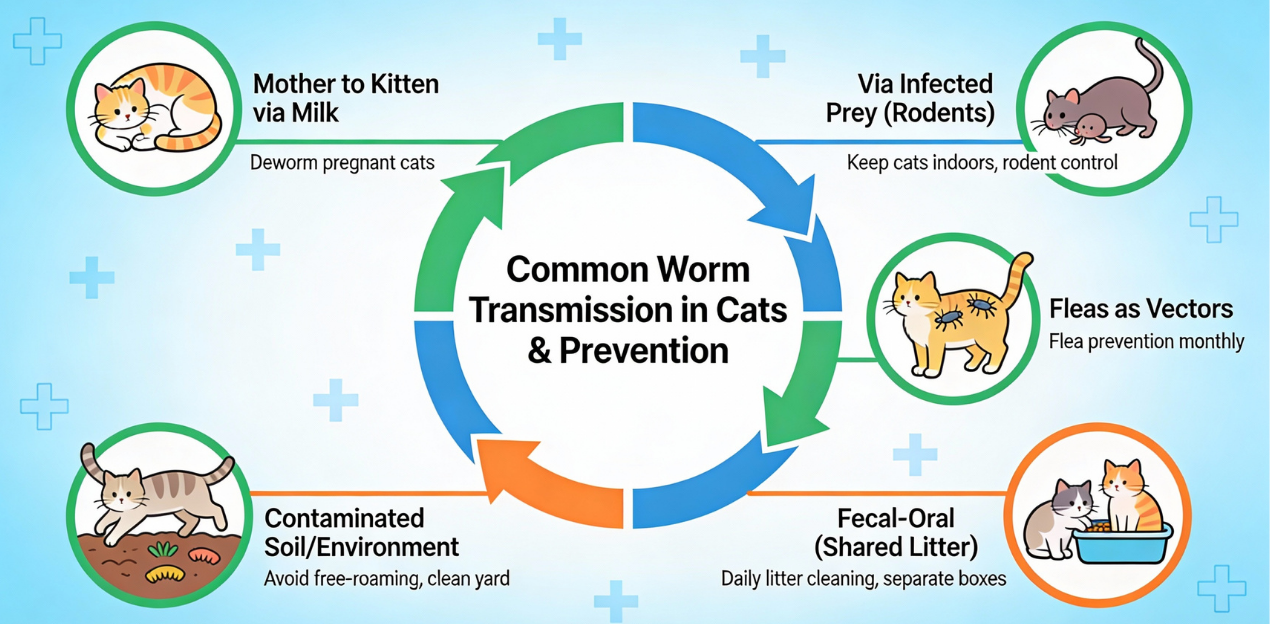
Cats can pick up worms in several ways:
From their mother: Kittens can be born with roundworms or get them through nursing
Eating infected prey: Mice, birds, and other small animals can carry parasites
Fleas: Cats who swallow infected fleas while grooming can develop tapeworms
Contaminated soil: Walking through infected areas and then grooming their paws
Contaminated environments: Sharing litter boxes or environments with parasite eggs can increase risk
Can Humans Get Worms From Cats?
Here's something important to know: certain cat intestinal parasites can also be a human health concern, especially for children and pregnant women.
Roundworms and hookworms can be transmitted through contact with contaminated soil or litter
Always wash your hands after handling litter boxes
Keep children's play areas away from areas where cats may defecate
Regular semi-annual fecal testing helps catch these parasites early and protects your whole household
Treatment and Prevention
The good news? Worms are highly treatable with deworming medication. Your vet will identify which type of worm your cat has and prescribe the appropriate treatment. Some dewormers work on multiple types of parasites, while others target specific worms.
Prevention is easier than treatment. Here's how to protect your cat:
Keep up with regular deworming schedules, especially for kittens
Use monthly flea prevention products
Keep your cat indoors when possible
Clean litter boxes daily
Schedule semi-annual fecal testing with your vet (twice yearly)
Don't let your cat hunt or eat prey animals
Keep Your Cat Healthy
Most worm infections are preventable with routine care and attention. If you notice any signs of worms or it's been a while since your cat's last checkup, don't wait. Early detection makes treatment easier and prevents worms from affecting your cat's health.
If you're in the Somerville area and have concerns about your cat's health, our caring team at Tandem Vet's Somerville clinic is here to help keep your feline friend happy and healthy.
Book an appointment
Join the movement to reimagine vet care— Transparent, convenient, and hassle-free.


.avif)